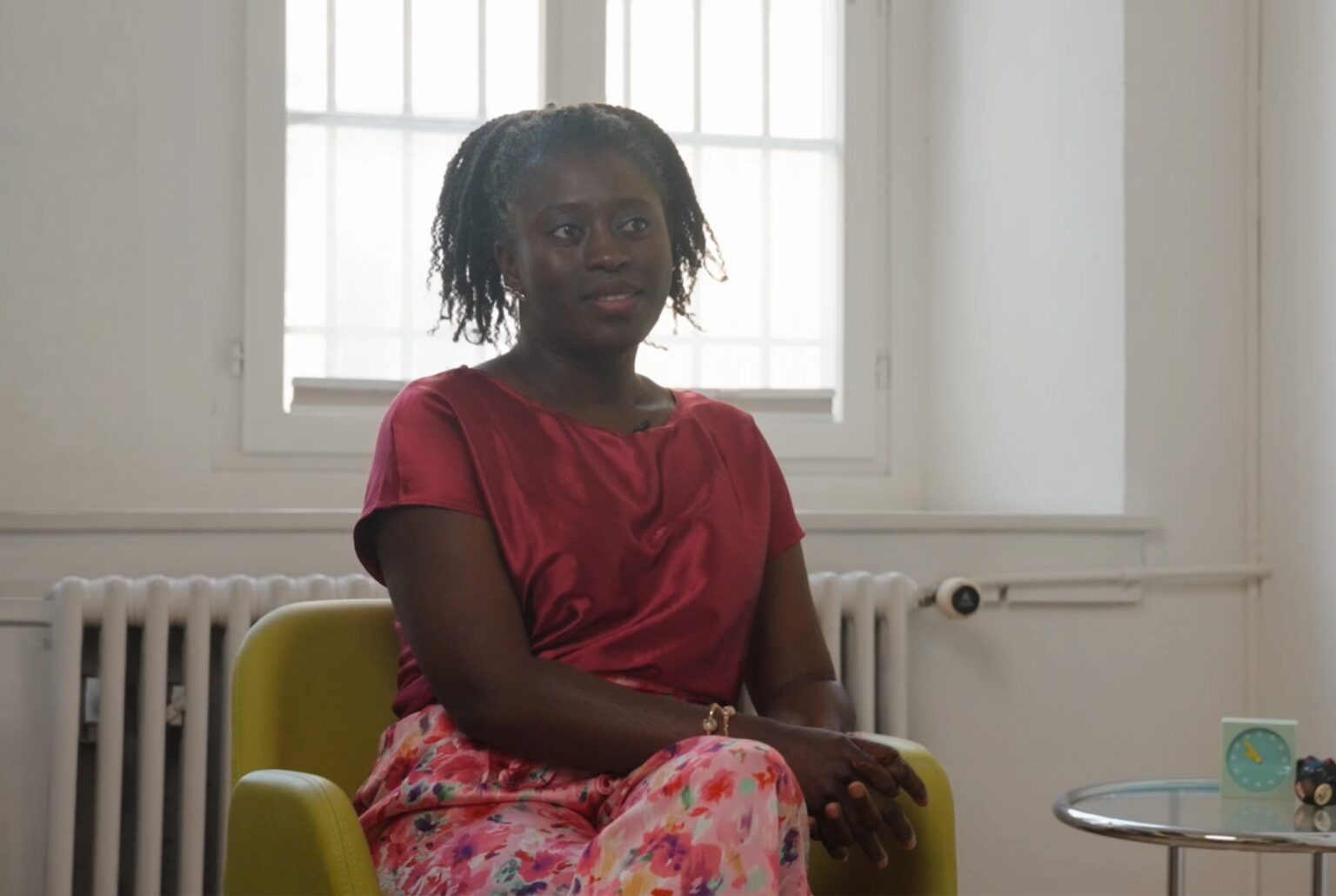
Mariama Hiestand-Saho kennt die Folgen von FGM/C aus unterschiedlichen Perspektiven: als selbst betroffene Frau, als Physiotherapeutin, als Multiplikatorin des Netzwerks gegen Mädchenbeschneidung Schweiz sowie als Community-Workerin von FGMhelp. Sie behandelt Frauen mit gesundheitlichen Beschwerden und sucht das Gespräch mit Betroffenen, Angehörigen und Fachpersonen. Sie weiss, wie unterschiedlich Menschen mit dem Thema umgehen. Umso wichtiger ist ihr die Art, wie sie das Gespräch führt: «Es spielt keine Rolle, ob sie es erlebt haben oder nicht. Sie haben ihre unterschiedlichen Erfahrungen. Und sie zu informieren, mit Respekt und ohne sie zu stigmatisieren, das ist für mich das Wichtigste.»
Ein Berufsweg über drei Länder
Aufgewachsen ist Mariama in Gambia. Mit 18 ging sie mit einem Stipendium zum Studium nach Kuba. Eigentlich wollte sie Medizin studieren, doch aufgrund eines Fehlers bei den Unterlagen war sie zunächst für eine Pflegeausbildung vorgesehen. Sie wechselte zur Physiotherapie, ursprünglich als Zwischenstation auf dem Weg zum Medizinstudium. Doch sie entdeckte ihre Begeisterung für das Fach und blieb dabei. Seit 2015 lebt sie in der Schweiz, wo sie an der Zürcher Hochschule für Angewandte Wissenschaften einen Masterabschluss erwarb. Heute führt sie eine eigene Praxis in Uster und hat sich unter anderem auf die Beckenbodentherapie spezialisiert.
Gespräche in der eigenen Familie
Offene Gespräche gehörten für Mariama schon während ihrer Kindheit in Gambia zum Leben. Ihre Mutter ermutigte die Kinder, Fragen zu stellen und auch schwierige Dinge anzusprechen. Das galt später auch für Mariamas persönliche Erfahrungen mit FGM/C. «Meine Mutter war die erste Person, mit der ich in der Familie über FGM gesprochen habe», erzählt sie. Die Auseinandersetzung mit weiblicher Genitalbeschneidung und damit verbundenen Komplikationen begleitete ihr Umfeld über lange Zeit hinweg. Mittlerweile wird nur noch selten darüber gesprochen: «Es war über Jahre hinweg ein Thema, aktuell aber nicht mehr – ausser jemand Neues stösst zur Familie.»
Traditionen bewahren, ohne alles weiterzuführen
Noch heute ist Mariama eng mit ihrer gambischen Herkunft verbunden. Für sie bedeutet die Ablehnung von FGM/C keineswegs eine Ablehnung ihrer Kultur. «Ich bin ein sehr traditioneller Mensch, aber ich finde, wir können unsere Kultur und Tradition leben, ohne dass die Beschneidung stattfindet.» Die Community-Workerin hat sich auch mit der Frage beschäftigt, welche Rolle die Religion bei der weiblichen Genitalbeschneidung spielt. Dazu hat sie das Gespräch mit religiösen Fachpersonen gesucht. «Es ist eine alte Tradition, und es ist in der Religion nicht vorgeschrieben, dass man das unbedingt tun muss. Ich habe mit einigen geredet und sie haben bestätigt, dass es keine Religion ist.»
Gemeinsam für Frauen und Mädchen
Mit ihrem Engagement bei FGMhelp möchte Mariama Frauen unterstützen, über weibliche Genitalbeschneidung aufklären und dazu beitragen, dass weitere Beschneidungen verhindert werden. Dabei setzt sie vor allem auf persönliche Gespräche. Besonders schätzt sie, dass sie Frauen gemeinsam mit Ann Schädler, Sozialarbeiterin und Fachleiterin von FGMhelp, umfassend betreuen kann – mit sozialarbeiterischer Beratung, ihrem Fachwissen in der Beckenbodentherapie und ihrer eigenen Erfahrung als Betroffene. «Eine bessere Zusammenarbeit wäre nicht möglich», sagt Mariama. Wie wichtig ihr dieser Einsatz gegen weibliche Genitalbeschneidung ist, zeigt ihre tiefe Überzeugung: «Ich weiss einfach, dass ich das Beste und das Richtige für die Frauen und Mädchen tue, weil ich viele Komplikationen sehe, die Frauen und Mädchen haben.»
Honouring tradition, ending FGM/C: a portrait of Mariama Hiestand-Saho
Mariama Hiestand-Saho works with FGMhelp to end female genital mutilation. We introduce her in this in-depth profile.
Mariama Hiestand-Saho understands the consequences of FGM/C from several perspectives: as a woman who has experienced it herself, as a physiotherapist, as a peer educator with the Network against Female Genital Cutting Switzerland and as a community worker with FGMhelp. She treats women with health problems and seeks dialogue with those affected, their families and professionals. She knows how differently people approach the subject. This makes the way she conducts these conversations all the more important to her: «It doesn’t matter if they went through it or not. They have their different experiences. Getting them informed with respect and not stigmatising, for me, is the most important thing.»
A career spanning three countries
Mariama grew up in The Gambia. At 18, she went to Cuba to study on a scholarship. She had originally wanted to study medicine, but an error in her paperwork meant she was initially assigned to a nursing programme. She switched to physiotherapy, initially intending it as a stepping stone to studying medicine. But she discovered a passion for the field and stayed with it. She has lived in Switzerland since 2015 and went on to earn a master’s degree at the Zurich University of Applied Sciences. Today, she runs her own practice in Uster, where pelvic floor physiotherapy is one of her specialities.
Conversations within her family
Open conversations were part of Mariama’s life from her childhood in The Gambia. Her mother encouraged the children to ask questions and raise difficult subjects. Later, this also extended to Mariama’s personal experiences of FGM/C. «My mother was the first person that I spoke to about FGM in the family», she says. For a long time, female genital mutilation and its associated complications were a concern for the people around her. These days, they rarely talk about it: «It’s been a topic for years, at the moment not any more – unless someone new joins the family.»
Preserving traditions without passing everything on
Mariama remains deeply connected to her Gambian roots. For her, rejecting FGM/C in no way means rejecting her culture. «I am a very traditional person, but I find we can embrace our culture and traditions without having the cutting happen.» The community worker has also explored the role religion plays in female genital mutilation. To learn more, she sought out conversations with religious experts. «It is an old tradition, and it’s not compulsory in the religion to say we absolutely have to do it. I have spoken to few, and they did confirm that it is not religion.»
Together for women and girls
Through her work with FGMhelp, Mariama wants to support women, raise awareness of female genital mutilation and help prevent it from happening to others. She focuses above all on personal conversations. She particularly values being able to offer women comprehensive care alongside Ann Schädler, a social worker and specialist lead at FGMhelp – combining social work counselling, her own expertise in pelvic floor physiotherapy and her personal experience of FGM/C. «The collaboration couldn’t be better», says Mariama. Her deep conviction reflects how much this work against female genital mutilation matters to her: «I just know I’m doing the best and the right thing for the women and girls, because I see a lot of complications women and girls have.»